

Hirémy-Hirschl, Adolf
Available Artworks



Sold Artworks

Biography
Adolf Hirémy-Hirschl
1860 Temesvar (Hungary) – 1933 Rome
During his studies at the Vienna Academy of Fine Arts from 1874 to 1882, Adolf Hirschl specialised in historical painting. He developed a predilection for genre scenes with references to Roman antiquity, the most important examples of which are the paintings Farewell. Episode from Hannibal’s Crossing of the Alps and The Entry of the Goths into Rome. This last painting earned the ambitious artist, who grew up in humble circumstances, a two-year scholarship to Rome, where he spent the years 1882 to 1884. For Hirschl, the direct encounter with the classical world was to be an inexhaustible source of inspiration.
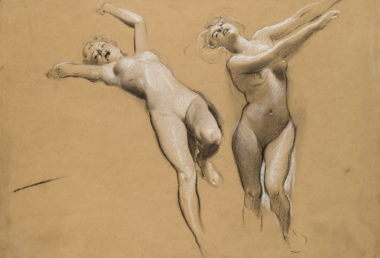
On his return to Vienna, Hirschl – like many other artists of his generation – set out to emulate the renown of the painter Hans Makart, who had died in the autumn of 1884. To this end, he expanded his repertoire to include mythological and Christian themes, with a marked preference for morbid subjects with erotic undertones. He participated in international art exhibitions in Germany, France, Belgium and Russia, contributing dramatic, brilliantly composed and technically perfect paintings such as The Plague in Rome, or Prometheus and Saint Cecilia. This brought him additional renown outside the Austro-Hungarian Empire from the late 1880s onwards. The numerous medals and awards he received show the extent to which his pictorial imagery spoke to contemporary taste. It drew on the tradition of tableaux vivants and was designed to overwhelm the viewer. Marking the peak of this creative phase was the monumental painting The Souls on the Banks of the Acheron (1898). It was awarded a gold medal at the important exhibition staged by the Vienna Künstlerhaus in 1898 to mark the fiftieth anniversary of Emperor Franz Joseph’s reign.
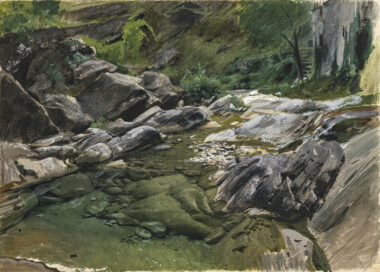
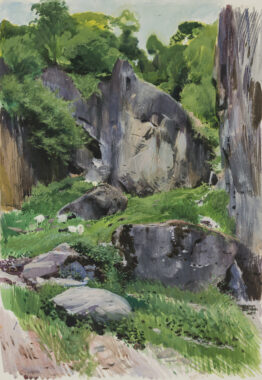
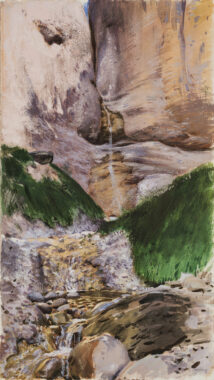
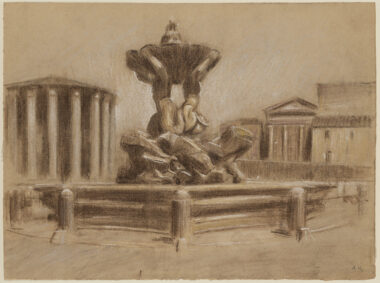
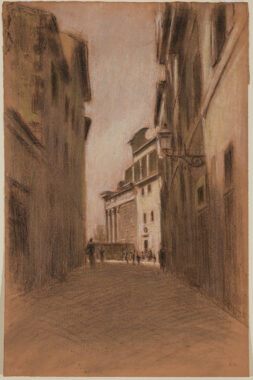
At the pinnacle of Hirschl’s social, economic and artistic renown his liaison with Isabella Ruston-Schön, the married daughter of an industrialist, and the birth of their daughter Maud, brought his meteoric rise to an abrupt end. In the summer of 1898, the couple married in a Protestant ceremony on Heligoland and moved permanently to Rome. In 1899, Hirschl renounced his Austrian citizenship. He changed his name to Hirémy-Hirschl, taking up Hungarian citizenship. Although his creativity was unabated and he enjoyed general recognition among the community of German artists working in Rome he failed to build on the successes of his Vienna years. This circumstance, as well as changes in contemporary taste, may have led him to turn increasingly to motifs from his personal surroundings and to make studies from nature. This body of work, intended only for a small private circle, forms a remarkable counterpoint to his official oeuvre. During his lifetime he was known by the outside world primarily as the creator of sombre mythological images with apocalyptic symbolist overtones.
PDF Download